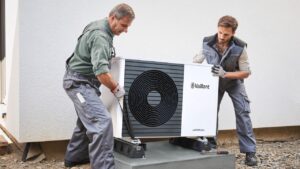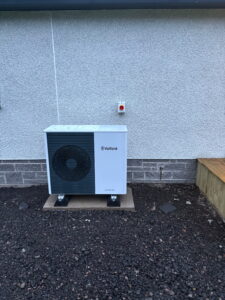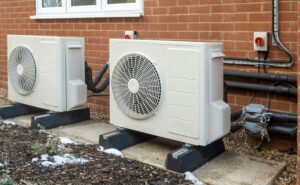
Yes, heat pumps can be worth it in Scotland, but the quality of the system design matters far more than Scotland’s reputation for cold weather. Modern air source pumps can continue operating at sub-zero temperatures, although their efficiency reduces as outdoor temperatures fall.
For homeowners and businesses, the more important questions are whether the building retains heat effectively, whether the heating system can work efficiently at lower flow temperatures, and whether it has been correctly sized for the property’s heat demand.
Are Heat Pumps Worth It in Scotland’s Cold Weather?
For a suitable building with a correctly designed heating system, yes. Cold Scottish weather does not automatically make it unsuitable.
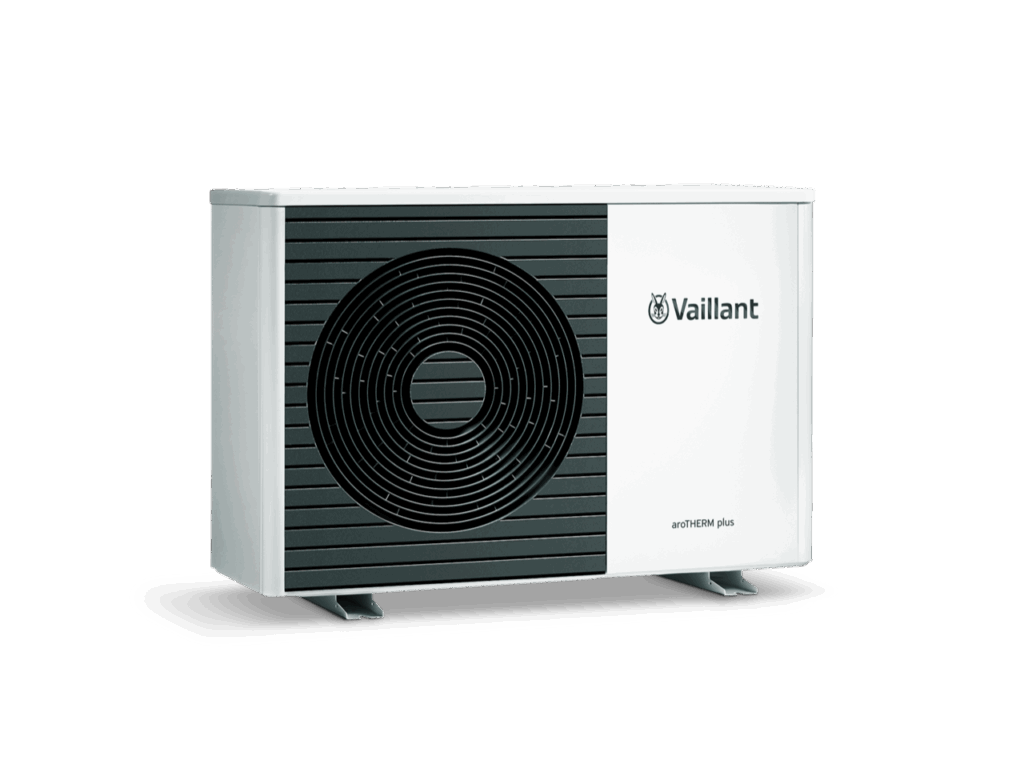
An air source heat pump extracts heat energy from the outside air and transfers it into the building’s heating system. Heat is still present in outdoor air when temperatures fall below freezing, which means the technology can continue working in winter. Energy Saving Trust states that heat pumps can perform at temperatures of around -15°C or below, depending on the system.
The Met Office notes that the efficiency of air sources decreases as outside temperatures fall. This is because the system has to work harder to extract heat and raise it to the required temperature.
That is why the answer to “Are heat pumps worth it?” cannot be based on outdoor temperature alone. Correct sizing, heat-loss calculations, radiator output, controls and flow temperature all influence real-world performance.
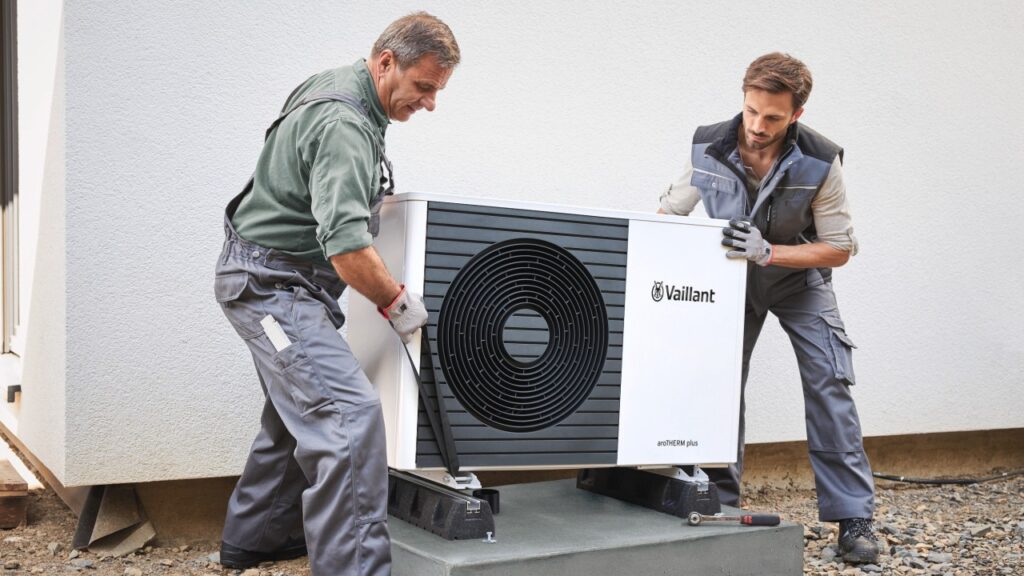
How Efficient Are Heat Pumps?
They can be considerably more energy efficient than heating systems that create heat by burning fuel.
Energy Saving Trust states that they can be more than three times as efficient as gas or oil boilers in terms of useful heat delivered for the energy consumed.
This does not mean energy bills will automatically be three times lower.
Running costs are affected by:
- Electricity Tariff: The price paid for electricity has a major influence on running costs.
- Flow Temperature: Lower water temperatures generally help it operate more efficiently.
- Building Heat Loss: Poorly insulated premises require more energy to maintain comfortable temperatures.
- Radiator Sizing: Emitters must provide enough heat at the lower temperatures commonly associated with heat pumps.
- System Controls: Weather compensation and correctly configured heating curves can improve operation.
- Usage Pattern: Generally favour steady operation rather than repeated short periods of high-temperature heating.
Energy Saving Trust specifically recommends steady temperatures, extended running periods and appropriately low flow temperatures to support efficient operation.
The important figure is therefore not simply the efficiency stated on the product specification. It is how efficiently the whole heating system performs throughout a Scottish heating season.
Why Does System Design Matter So Much?
Good installation starts with understanding how much heat the building actually needs.
Heat pumps operate differently from conventional gas boilers. A traditional boiler may supply radiators with relatively high-temperature water and provide short periods of intense heating. They usually achieve better efficiency by supplying lower-temperature heat for longer periods.
This means an installer needs to look beyond the outdoor unit.
A proper assessment may consider:
- Heat loss from individual rooms
- Insulation and building fabric
- Existing radiator outputs
- Pipework condition and sizing
- Required flow temperatures
- Heating zones and controls
- Hot water demand
- Available outdoor and indoor space
- How and when the building is occupied
Energy Saving Trust notes that radiators originally designed around boiler temperatures may need to be larger when operating with the lower water temperatures.
For businesses, this can be particularly important. An office occupied steadily throughout the working day may have very different heating requirements from a workshop, retail unit or premises with intermittent occupancy.
Plumbing & Heating Dynamics approaches modern heating systems with a focus on performance, controls and appropriate system design, drawing on more than 25 years of heating industry experience across domestic, commercial and public-sector environments.
Can Air Source Heat Pumps Keep Buildings Warm in Winter?
YeYes, when correctly specified.
A common misconception is that an air source heat pump stops working once the air outside becomes very cold. In reality, modern systems can extract usable heat at sub-zero temperatures. Energy Saving Trust discusses operation down to around -15°C or lower, although the unit may require supplementary heating during particularly cold conditions.
The bigger issue is whether the system can satisfy the building’s heat demand efficiently at the design temperature.
One that is undersized may struggle during colder conditions. A poorly configured heating curve may run at unnecessarily high temperatures. Radiators that are too small may leave rooms feeling cold regardless of how powerful the outdoor unit appears.
This is why increasing the size is not always the answer.
Sometimes the better solution is to improve:
- Radiator output
- Building insulation
- Heating controls
- System balance
- Water circulation
- Overall system efficiency
If the current system already suffers from uneven temperatures, restricted circulation or slow heat-up times, consider having the wider system assessed through heating performance improvements before assuming the heat source itself is the only issue.
Will It Cost Less to Run Than a Gas Boiler?
Not necessarily. Running costs depend on both technical efficiency and the relative price of electricity.
Energy Saving Trust currently notes that electricity on standard tariffs can cost considerably more per unit than gas. As a result, even though it uses energy much more efficiently, a pump on a standard electricity tariff can sometimes cost slightly more to run than a modern gas or oil boiler.
However, Energy Saving Trust also reports that suitable time-of-use tariffs can significantly reduce running costs, potentially making it cheaper to operate than a gas boiler in the right circumstances.
The result depends on:
- The heating system being replaced
- The building’s heat demand
- The seasonal efficiency achieved
- Electricity prices and tariff
- Flow temperatures
- Heating controls
- Whether gas standing charges can be removed
- Occupancy and heating schedules
For businesses, the calculation can differ further because commercial electricity arrangements, operating hours and heat demand vary significantly between premises.
If you are comparing a heat pump with conventional heating, our heat pumps vs gas boilers guide explores the practical differences in more detail.
Which Scottish Properties Are Best Suited to Heat Pumps?
Modern, well-insulated buildings can often be easier to adapt because their heat losses are lower. However, an older property is not automatically unsuitable.
A traditional stone-built house, older commercial building or property with an established wet central heating system may still be capable of using it successfully if the system is properly assessed and appropriate improvements are made.
It is generally more promising where:
- The property retains heat reasonably well
- Heat loss can be calculated accurately
- Suitable radiator or underfloor heating output can be achieved
- There is room for the required equipment
- The system can operate effectively at lower flow temperatures
- Controls can be configured appropriately
- The owner is prepared for a different heating pattern from a traditional boiler
What Is Different About Living With a Heat Pump?
It can feel different from traditional boiler heating, especially during a Scottish winter.
With a boiler, many people are accustomed to switching the heating on, rapidly warming hot radiators, then switching it off again.
They generally work more efficiently by maintaining temperatures gradually over longer periods.
Energy Saving Trust advises that keeping it operating for extended periods, with modest temperature setbacks rather than repeatedly allowing the building to cool significantly, can improve efficiency.
This means:
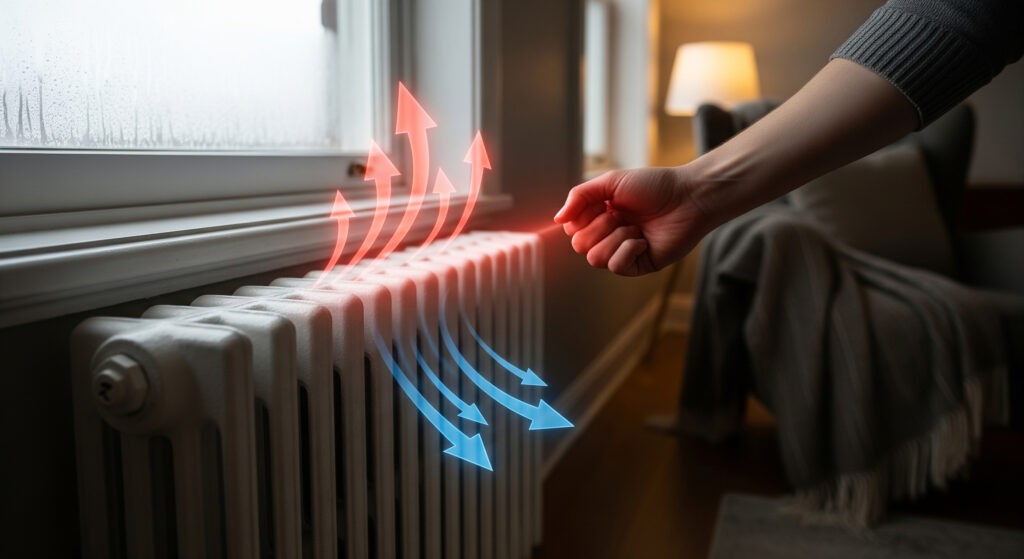
- Radiators may feel warm rather than very hot.
- Heating may take longer to raise a cold building to temperature.
- Consistent temperatures become more important.
- Weather compensation can adjust system temperature according to outdoor conditions.
- Correct controls become central to comfort and efficiency.
Are Heat Pumps Worth It for Scottish Businesses?
They can be, particularly for organisations taking a longer-term view of their heating infrastructure.
A commercial heat pump may be worth investigating if your business wants to reduce reliance on fossil fuels, modernise an ageing heating system or incorporate lower-carbon heating into wider building improvements.
The strongest commercial applications are normally those where the system is designed around actual operating requirements rather than installed as a simple boiler replacement.
Businesses should consider:
- Building occupancy patterns
- Required indoor temperatures
- Heating demand throughout the working day
- Existing distribution system
- Available electrical capacity
- Capital costs
- Long-term maintenance
- Energy tariffs
- Future building plans
- Sustainability objectives
Commercial premises also need more individual assessment than standard online domestic heat pump calculators can provide.
Plumbing & Heating Dynamics works across Central and Eastern Scotland, with heating services extending through Fife, Edinburgh, the Lothians, Tayside and Falkirk.
For commercial premises, the sensible starting point is an assessment of the building and existing heating system before deciding whether a heat pump is the correct investment.
When Might it Not Be the Best Choice?
It should not be recommended simply because it is a newer technology.
There are circumstances where improving the current system, replacing an existing boiler or carrying out building efficiency work first could be more appropriate.
For example:
- The property has significant unresolved heat loss.
- Required system alterations would be impractical.
- Existing radiators cannot provide adequate output at suitable temperatures without extensive changes.
- There is insufficient space for the equipment.
- The existing heating system has circulation or contamination problems that need resolving first.
- The customer needs a solution that does not match the operating characteristics of the proposed pump.
Plumbing & Heating Dynamics’ existing guidance reflects this approach, recognising that not every property is immediately suitable and that recommendations should be based on the system and property rather than assumptions.
Where a renewable system is not currently the right option, boiler installations or improvements to the existing heating system may provide a more practical solution.
How Can You Get the Best Efficiency?
The best results come from treating the heat pump and the building as one system.
- Get the Heat-Loss Calculation Right
- Keep Flow Temperatures Appropriate
- Use Suitable Heating Controls
- Check Radiator Output
- Maintain the Whole System
For ongoing support, read our maintenance guide.
So, Are Heat Pumps Worth It in Scotland?
For the right property, yes. Scotland’s climate is not a reason to dismiss heat pumps.
Modern systems can continue operating in freezing conditions, and their high energy efficiency makes them a credible alternative to traditional fossil-fuel heating. The crucial qualification is that efficiency decreases as outdoor temperatures fall, so accurate system design becomes particularly important in colder conditions.
Insulation, heat loss, radiator sizing, controls, operating patterns and the existing heating system should all inform the decision. Running costs also need to be considered realistically, because a highly efficient heat pump does not automatically guarantee lower bills on every electricity tariff.